Software Ate The World

Happy Friday!
We’re in the heart of earnings season, and there’s a lot of new information to digest.
In case you missed it, Steve Strazza walked us through his strategy that turns earnings reports into breakout trades. Catch the replay here. You don’t want to miss this.
Now - let’s get into it…
On August 20th, 2011 - venture capitalist Marc Andreessen shared an essay in The Wall Street Journal titled,
Why Software Is Eating The World
He was right.
Over the last decade plus, software transformed how we shop, communicate, travel, and invest.
Companies built around software dominated the market. Investors who understood this trend outperformed handsomely.
But there’s an important part of that story that doesn’t get talked about enough.
Software doesn’t grow on its own. It depends on hardware.
And when software advances, it eventually forces hardware to change too.
The Positive Feedback Loop Most People Miss
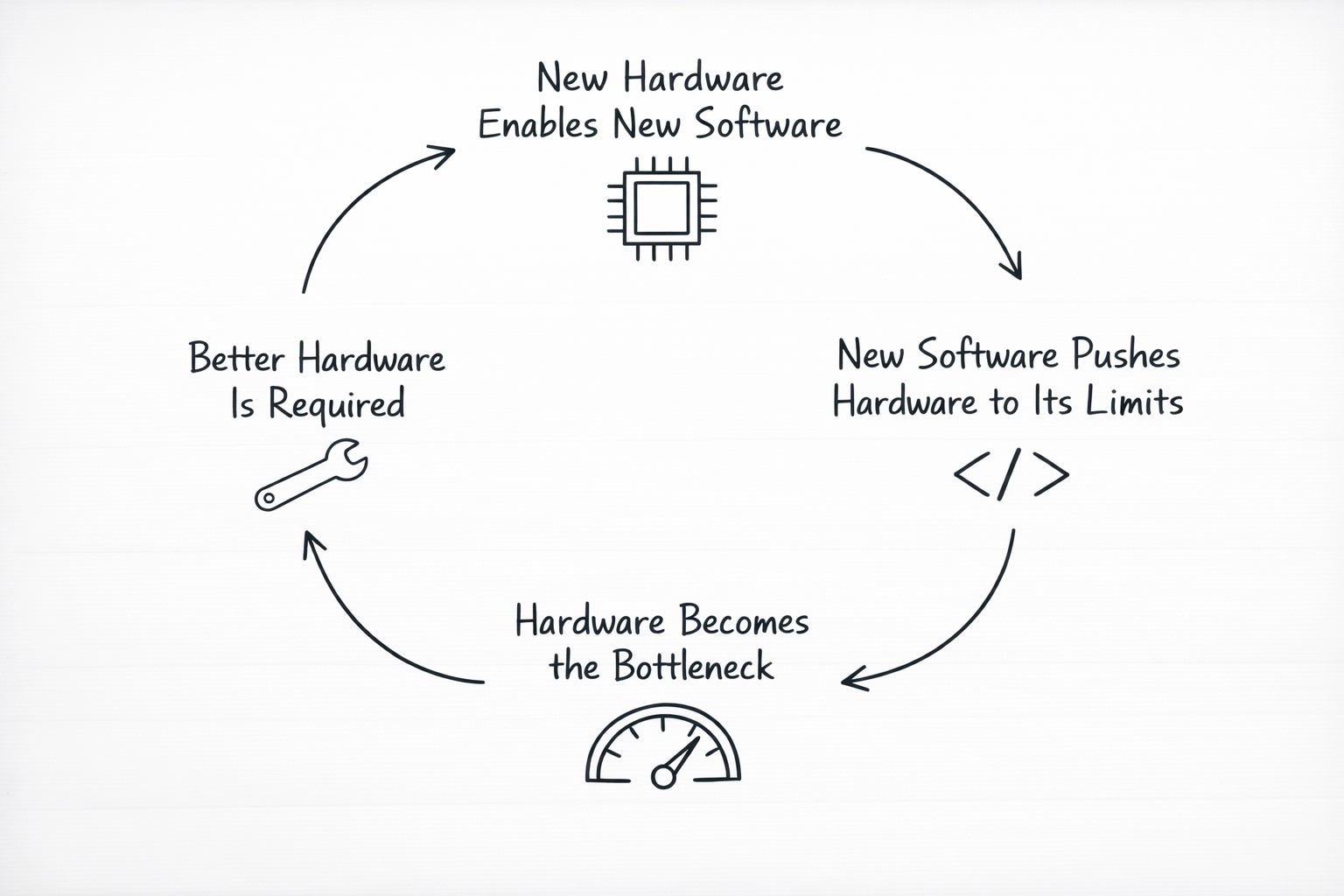
Here’s the feedback loop in simple language —
- New hardware makes new software possible
- New software pushes hardware to its limit
- Better hardware is then required
- The cycle repeats
This is how technology evolves.
Software may feel invisible, but it runs on real things: chips, memory, electricity, and data centers. When software becomes more powerful, existing hardware eventually can’t keep up.
That’s what’s happening today.
AI Is Software - But It Needs Hardware
Artificial intelligence is software. But it’s very demanding.
AI needs massive amounts of computing power, memory, and energy. The system we built for the internet and smartphones were not designed for this level of intensity.
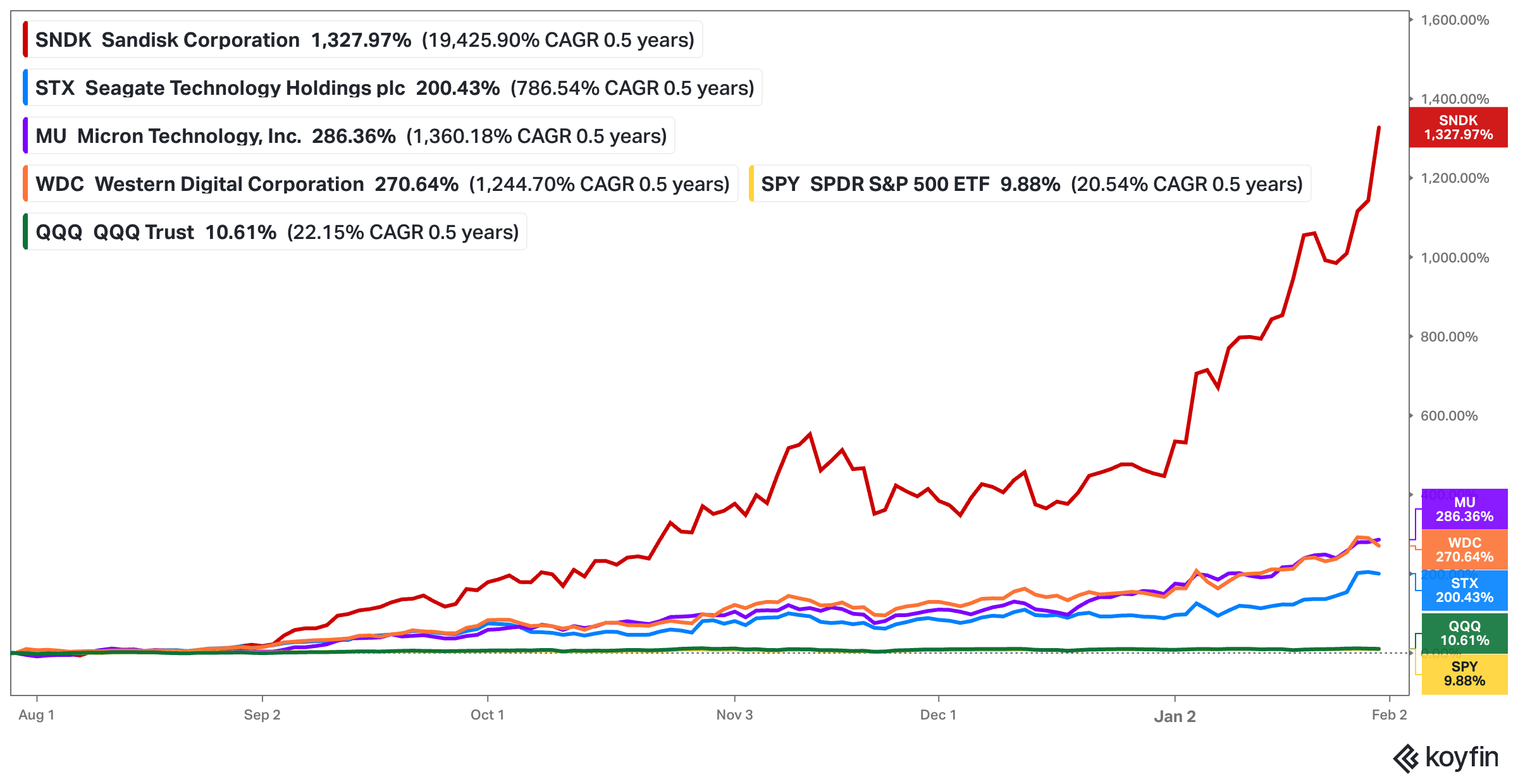
That’s why we're seeing outperformance in chip, memory, energy and infrastructure stocks. This isn’t random. It’s technology evolving.
Check out the 6-month performance of the memory stocks… The fact is, hardware is frantically playing catch-up.
Hardware Isn’t Disappearing. It’s Changing.
When people hear “hardware,” they often think of insignificant upgrades — a better iPhone camera, or a thinner laptop.
That’s not what this is about.
This is about a change in what personal computing devices actually are.
Look at the automobile.
A car is a physical machine.
Tesla didn’t change that. But it turned the car into a software-driven product. Updates, features, and improvements now ship through software updates.
Today, the Tesla drives itself - creating a new user experience to travel.
We’re Hitting the Limit of Today’s Hardware
The smartphone changed everything. It enabled social media, content creation, and constant connection.
But people are pushing back…
Youngsters - like myself - don’t want more screens. We want to reclaim our attention.
This doesn’t mean we want less tech. It means we want better tech.
And when our desires, our behaviors, shift, the tools we use must change too.
What This Means
Software reshaped the world.
Now software is forcing us to rebuild the machines it runs on.
AI is accelerating this process. It’s pushing us toward new form factors of hardware. Devices built for specific tasks, rather than endless doomscrolling.
We may not know exactly what these devices will look like yet.
But history is clear - when software hits its limit, new hardware follows suit.
If I had to speculate, the new personal computing form factor will be more like an autonomous flying vehicle and less like an iPhone.
I could be wrong, but I hope I’m right.
Talk To Me
I’d love to hear your thoughts on the ideas I shared above. Do you agree? Disagree?
What is your dream personal computing device?
Talk to me, Goose.
Disclosure: This is not financial advice.